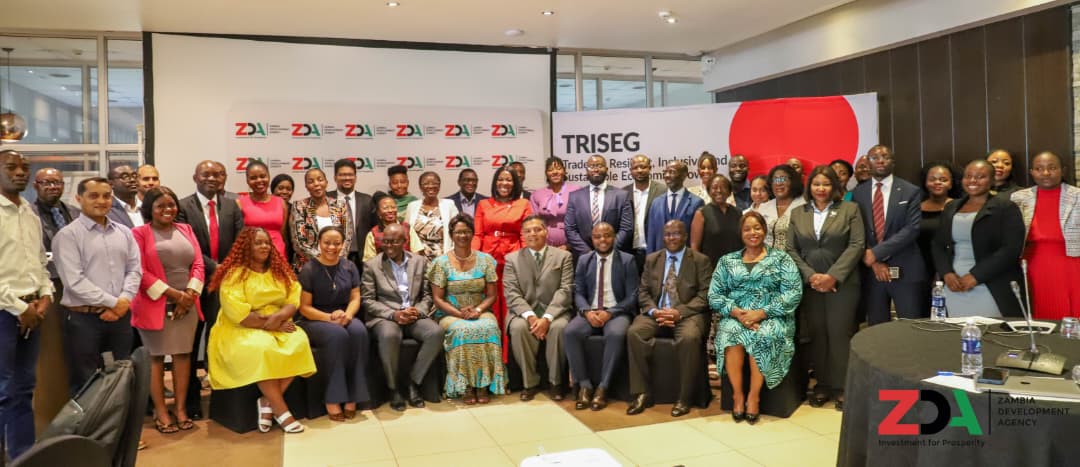
The Zambia Development Agency (ZDA) and the Trade Facilitation Office (TFO) of Canada recently held a Market Research Validation Workshop under the project Trade for Resilient, Inclusive and Sustainable Economic Growth (TRISEG).
The four-year project, which runs from 2026 to 2030, is set to be implemented by ZDA with funding from TFO Canada and is aimed at strengthening the capacity of small and medium-sized enterprises (SMEs), particularly those owned and led by women, youth and underrepresented groups in Zambia’s processed foods sector, to access Canadian and regional markets.
Speaking during a workshop in a speech read on her behalf by Director Human Resources and Administration Agelina Chanda, Ministry of Commerce, Trade and Industry Permanent Secretary for Commerce and Trade Lillian Bwalya said Government had reaffirmed its commitment to strengthening Zambia’s trade and investment agenda through initiatives aimed at improving the export readiness and international competitiveness of small and medium-sized enterprises (SMEs).
Ms. Bwalya said the project comes at an important time when Government is intensifying efforts to promote trade-led economic growth, diversify the economy and enhance private sector participation.
She noted that the initiative would contribute towards increasing the competitiveness of Zambian enterprises in domestic, regional and international markets.
And Zambia Development Agency Director, Export Promotion, Chileshe Wagner highlighted that the project was aligned with the Government’s commitment to economic diversification through agriculture, increased exports, job creation and inclusive economic growth.
She noted that the project would also contribute to strengthening institutional capacity within ZDA, enabling the Agency to improve the delivery of services to enterprises and support businesses to participate more effectively in regional and international trade.
She explained that the initiative is expected to contribute to broader national objectives relating to trade facilitation, enterprise development, economic resilience and sustainable economic growth.
Meanwhile, TFO Project Manager, Zaki Munshi, said the project is set to be implemented in 16 developing countries and is designed to benefit about 3,200 small and medium enterprises, particularly those led by women and other unrepresented groups.
He disclosed that the purpose of the project was to reduce poverty by increasing the economic well-being of SMEs by helping them become more export-ready and better connected to the Canadian and other International Markets.